
Shagufta K. Iqbal reflects on her new poetry collection ‘Everything In-Between’ & the importance of diverse voices in children’s books
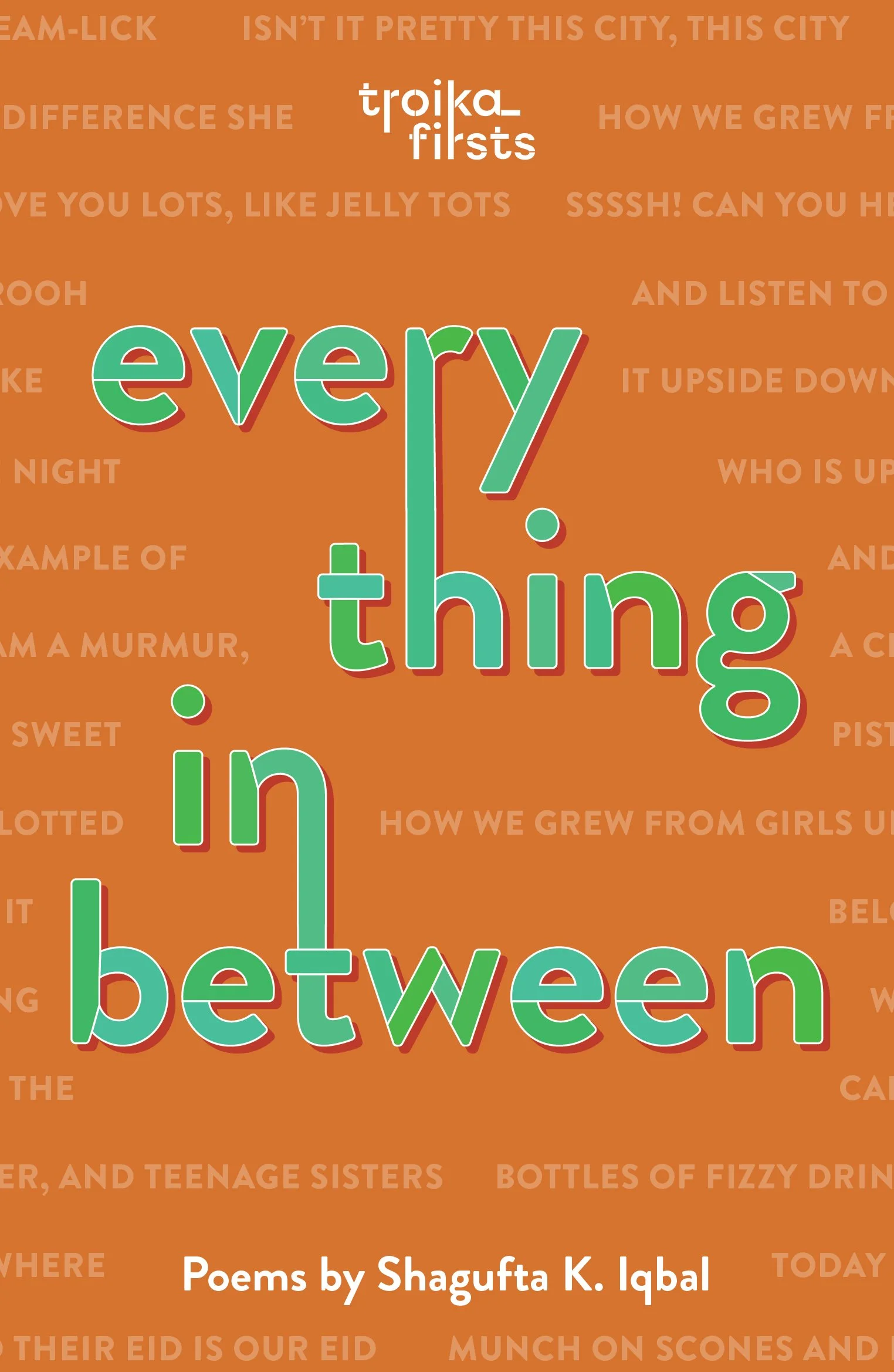
‘Everything In-Between’ by Shagufta K. Iqbal is the second book in our ‘Troika First’ series, which showcases debut children’s poetry collections from new and emerging authors.
Shagufta has written poems for adults and stories for children, but this is her first children’s poetry collection. Here, she marks the book’s launch with some thoughts on the importance of enabling all children to see themselves reflected in poems and stories.
Shagufta K. Iqbal: “Diversity in publishing should not be a tick-box exercise. We live in a world that’s desperately in need of sharing stories and perspectives that help bring us together. There are already too many narratives that pull us apart.
“It’s now the National Year of Reading, a government-led initiative that seeks to encourage readers of all ages to ‘Go All In.’ Readers and writers are up against the power of social media, and in recent years we’ve seen a real decline in young people reading for pleasure. Last year, the National Literacy Trust reported that reading for pleasure was at an all-time low, with only one in three children aged eight to 18 saying they enjoy reading in 2025, a 36% drop since 2005.
“I’ve been working in school settings for more than twenty years, and I agree that there are many factors that can make reading for pleasure difficult for young people in this modern age. This is especially the case if you can’t see yourself, your culture or your interests reflected in the books you see on the shelves – whereas they’re easier to access at the click of a button on a smartphone. A recent article in The Guardian states that a report by Inclusive Books for Children (IBC), highlights that: “about 6% of children’s books featured marginalised main characters, and just under half (49%) of those were created by authors or illustrators from those groups.”
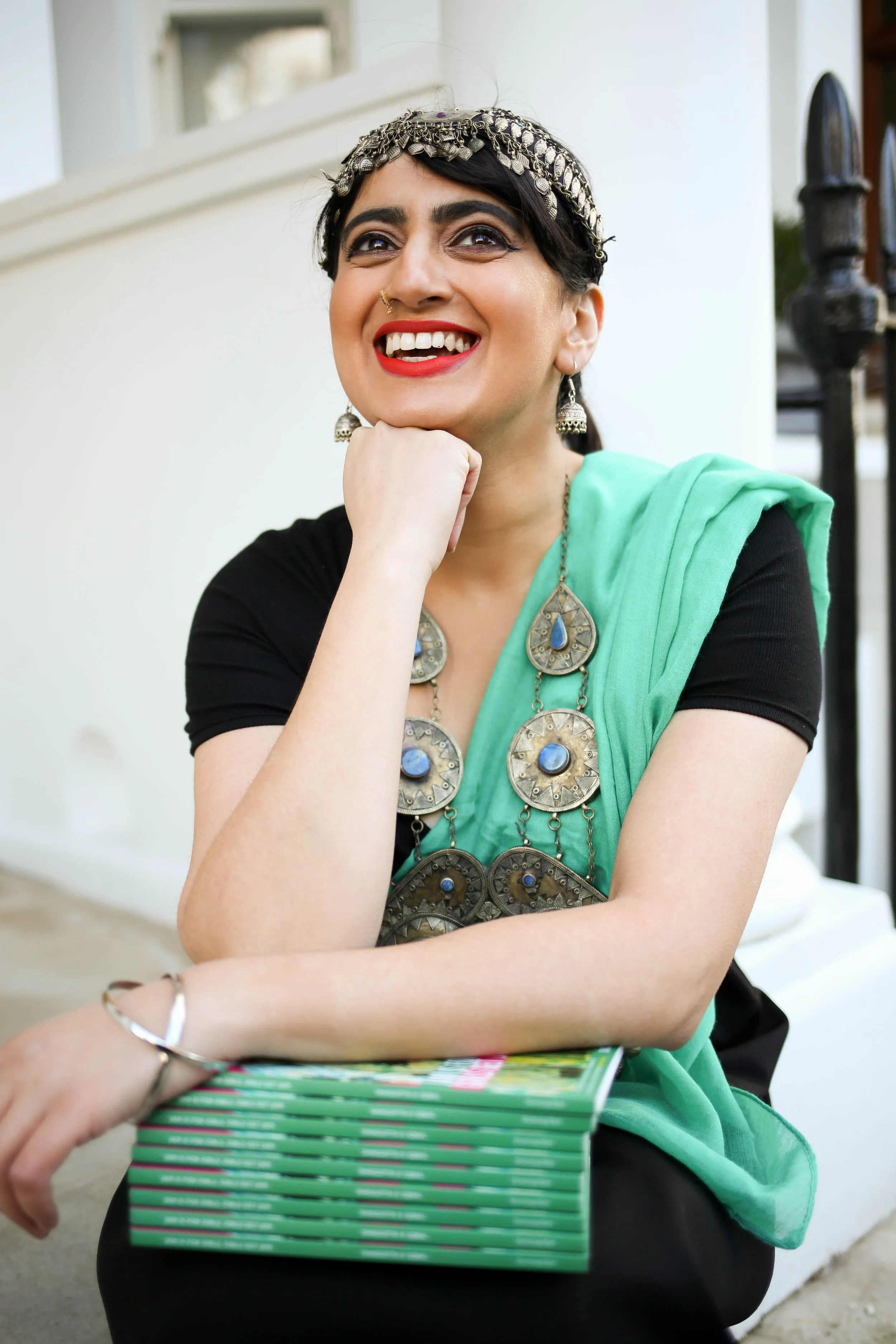
Shagufta K. Iqbal
“That feeling of being special, of knowing that your story matters.”
“I, along with many other writers I know, write so that young people feel seen and heard. I still remember the feeling of the first time I held a book where the main character looked something like me. That feeling of being special, of knowing that your story matters. I now write for my younger self, my children, and children of friends and family, who may not have come across a 3D character from their own background. Not as the side character, someone there in the background moving the plot along, providing support to the main story. But a character with depth, their own fears, trials and tribulations. I write about young people who are neurodiverse, (such as in my picture book The Spelling Bee, Big Cat, Collins). I write about young people who grow up in non-traditional family structures. I write about young people who are from minority religious backgrounds. You’ll find many of these poems in my new collection Everything In-Between.
“Yet there are so many more stories waiting to be written and distributed to young readers who are desperately waiting to be seen. I commend the small independent publishers here, because they often take the risks that the larger publishing houses shy away from. They build and support new writing voices, and fill a gap in the industry landscape that prevents many young people from being able to feel validated when reading for pleasure.
“Inside a book…”
“If we want a world that builds and repairs the fragmented relationships that we see between nations across the world, then let’s start in our classrooms. Let’s provide young people a place to be curious, to question and to challenge narratives of hate. It can start very simply in the pages of a book, a place where any reader can walk in the shoes of someone else. Inside a book, we can learn to see and feel empathy for someone who was once maybe invisible to us.”
Class 5T, Period 3
Kwan says...
she likes my hair because it’s wavy.
I love her hair cos it’s super straight.
Sita has a bob, doesn’t want her hair to grow,
While Nathaniel is growing out his awesome afro.
Phoenix has a magnificent mohawk,
Tammy’s hair is gloriously ginger.
Amir’s hair is a midnight-sky black
While Bethany has dyed her ends pink.
Serena has shaved it all off
And asks, ‘What do you all think?’
Devante has a fantastic fade
And Surinder wears a perfect plait.
Ina’s hair is cute and curly
And Ashante has brilliant braids.
Max’s hair is floppy — it falls over his eyes —
While Abdi’s hair is stylishly short.
Rajpal wears his hair in a terrific topknot
And Gisele keeps her hair nice and natural.
Curtis has cool cornrows,
Mahdiya’s hair is luscious and long.
Chloe’s hair is bright and blonde
And Yasmin’s hair is beautiful and brown.
Miss Akhtar says... ‘Yes, yes,
we all have beautiful hair’.
(Miss Akhtar wears hers in a bun.)
‘But can we please open our books, and turn to page twenty-one.
Let’s examine propaganda in history.
How differences were not celebrated,
but used to isolate and cause misery.
Not at all like my wonderful class of 5T
who show kindness and respect.
A shining example of how the world should be.’
Discover more at www.troikabooks.com/everything-in-between