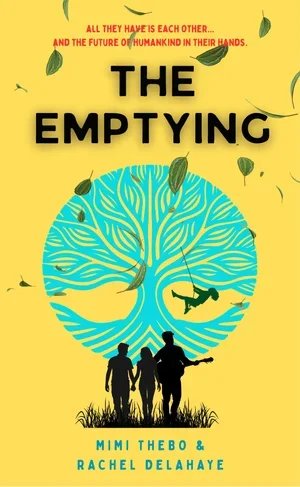
Two authors, two characters and two stories that become one: how did Rachel Delahaye and Mimi Thebo pull off their unusual approach to writing ‘The Emptying’?
The Emptying, written with children around 9-12 years in mind, is a dystopian story about AI, human connection and what happens when we stop taking responsibility for each other and the future - and is a must-read for our times.
It’s also a very unusual book in terms of how it was written: collaboratively, by two award-winning authors, each writing one of the book’s two lead characters and alternating between them.
“Two children’s authors walk into the cafe of a farm shop… It sounds like the beginning of a bad joke, but it’s really how The Emptying came to be”, said co-authors Rachel Delahaye and Mimi Thebo when we caught up with them for a chat about their collaboration. Read on to find out more…
You’re both established and successful authors. What made you decide to write a story together?
Mimi: “Rachel and I meet regularly just to talk about our lives as writers and… you know… humans. I love her to bits! Anything might come up in these chats and one day, AI came up. I’d just joined a class action suit because three of my books were scrapped and we started talking…”
Rachel: “On this particular meet-up, I was in a slump so bad, even a good eggs benedict couldn’t raise my spirits. The cause: AI - but on a more existential level. As a devourer of sci-fi films from an early age, I’d been brought up on the machine take-over theme, but suddenly it seemed to have burst free from the storyboard. Most people glaze over when I get my doomsday socks on, but Mimi didn’t. We talked it out. And talking became wondering, wondering became creating… “
Mimi: “Yes, the thing about having a really well-developed imagination is that you can’t turn it on and off. We kept riffing about ways AI could go wrong and what humans actually are and why they’re still valuable and before we knew it, we were acting out little scenes… ‘One of us should write this,’ Rachel said. It had cheered us up immeasurably!”
How did the decision come about to have two lead characters, and for each of you to write one of their two voices / stories? And how on earth did you pull it off in a way that came so neatly together?
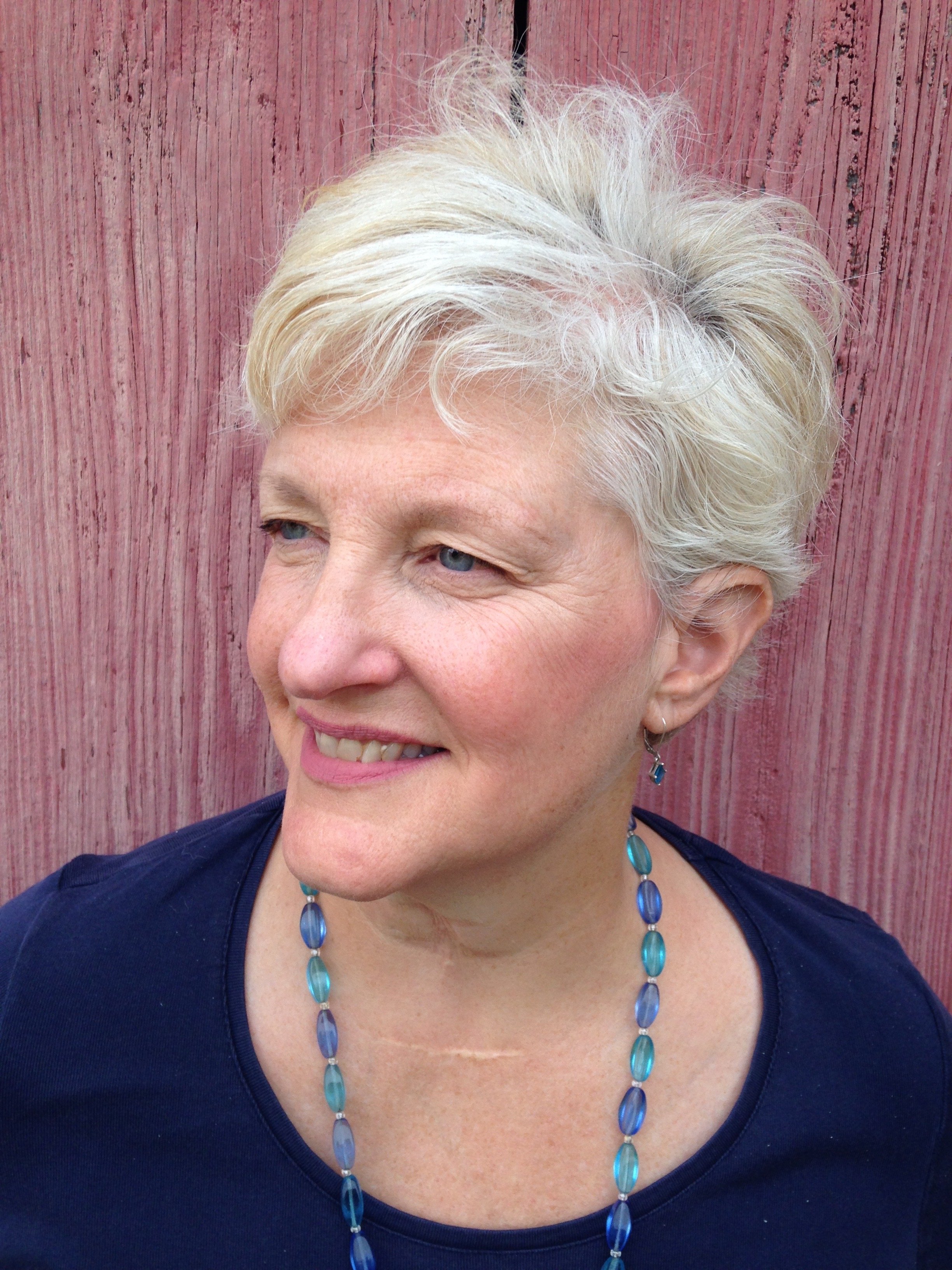
Mimi Thebo
Mimi: “Oh, you mean our “wonderfully flawed and complex humans” (Through the Bookshelf)? Both Rachel and I are somewhat in the centre of the planners/pantsers continuum…”
Hang on, what…?
Mimi: “Oh right, sorry! ‘Planners’ are writers who plan (sometimes to within an inch of their lives) and ‘pantsers’ fly by the seat of their pants. They’re pretty much opposites but in reality it’s often more of a spectrum. Anyway, we needed some kind of plan to get us started, but not enough to shut down our imaginations. A year or so before, I’d studied narrative structure on research leave from the University of Bristol with a grant from Arts Council England, and so I was very keen on giving us some kind of scaffold as we built the story. I somehow convinced Rachel that the basic structure of The Wizard of Oz would be useful. So I put Dorothy (Dot) and Toto on the farm and she put Acker and Bean in the city and we went to work! We knew they’d meet up in the empty Parliament (which is one of my favourite scenes in the book) and that they’d travel through the woods to get to whatever ‘Oz’ would be (it turned out to be Oxfordshire!). And that was enough of a structure to get us going.”
Rachel: “Mimi’s world-building is, well, out of this world. And as she already had a clear idea of the farms and how distribution would (or wouldn’t work), the character of Dot fell from her keyboard. I’m an action, pace and cliff-hanger fiend, so writing the city character, Acker, seemed a natural fit. Although Acker was a placeholder name, it stuck. Only later did I discover that it means ‘field’ which has a nice link to Dot. I also started writing the character of Bean - originally as a construct to show how self-aggrandising Acker was - but she took on a really important role of her own, and that’s something that Mimi and I worked on together. We ‘co-parented’ her and nurtured her wild woo-woo spirit.”
How did it actually work in practice?
Mimi: “Well at first, it didn’t. We were kind of scared. It turns out that we both have ADHD and we were both fairly terrified that we’d let the other person down. The fact that we started out each writing very different stories for the very different experiences in the urban and rural environments helped a bit, and then we just started very politely pasting in stuff we’d written so far....
That didn’t last long!! Soon, we were jumping into each other’s writing and commenting. I was a bit shocked the first time Rachel wrote one of my characters, but she did it so well, and I was so pleased with what she’d done, that I got over it very quickly.”
Rachel: “After the first hurdle (fear paralysis) it really evolved quite easily. Mimi wrote a chapter, sent it to me, I wrote the next, sent it to her etc. Like a kind of tag or relay. Because the plot was so loose, each chapter was a delightful surprise and sometimes re-routed the story, which took us to both scenic and dramatic places. The more we got into it – and the more we realised it was actually working - the more confident we became in editing, moulding and rearranging all the chapters. It was no longer a mash-up of two works, but two writers matching up to make a single, powerful story.”
How did the experience compare to your usual process of solo writing?
Mimi: “I don’t know how Rachel feels, but I found it really nice not to be alone for once when going out on a limb and writing something new. It was so lovely waking up and finding what Rachel had written and seeing her little comments on what I’d done the morning before.
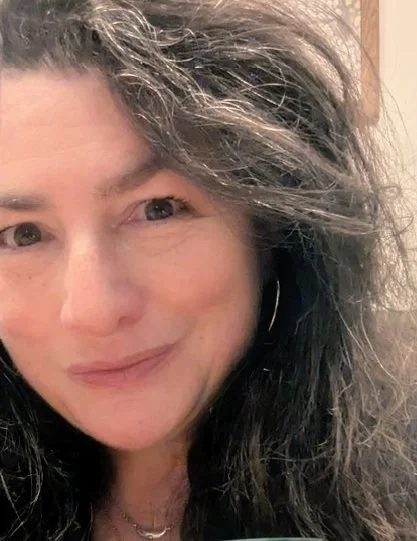
Rachel Delahaye
Rachel’s got this really wild imagination that just springs things on you that you’d never expect. One of our major characters was like that… nothing we’d discussed, Rachel just… spontaneously birthed her! The same with half the things that happen on the Ridgeway…”
Rachel: “We didn’t have set times of day to write, and I actually thought it would probably take forever. Mimi works very hard as Director of a Creative Writing MA and doesn’t have a lot of free time. However, we both got the bug! We wrote pretty much daily - at whatever time of day we could - and the manuscript leapt to life. Nervousness, procrastination and doubt all played their part along the way, but they made us think, helped us determine what was important, and tested us to see how much the story wanted to come out. A lot, as it turns out!”
Did the story evolve any differently compared to when you write alone?
Mimi: “I do a lot of thinking before I actually write anything. I carry the fictional world around in my head for ages and ages. I have conversations with the characters, travel in the settings (often actually physically travelling to the settings) and just generally mess about with it. I’m doing that right now with an idea, just messing around while I write another story altogether.
But this was much more immediate. I had maybe two or three months to live mentally in that world in my spare time and then I was already writing… and two of us were living in it and it was changing as I wrote. I think if I had been on my own, it would have been too unsettling, but with Rachel it was just…fun.
Rachel: “I write this way all the time. I start with a concept - a premise - and I might have a couple of big scenes in mind. After that, I just puzzle away with characters and conflicts and treat every writing session as a lucky dip. I see what comes up. We pretty much did the same with The Emptying. We had the idea, we had a couple of scenes, we had no idea how we were going to join them all together…
Like Mimi, I tend to think a lot around a question or concern before I start writing (questions and concerns are the springboards for my stories); not a plot, just an exploration of the ‘what ifs’. Because both of us had been consumed by thoughts of AI and its place in our future, the building blocks were there - the ‘what ifs’ and the physical and emotional fall-outs. In addition, Mimi pitched The Wizard of Oz as a roadmap for us to follow, and I pitched War Games as a destination. So we had a kind of GPS – which was on the blink most of the time - but it gave us direction!
Would you do it again?
Mimi: “If we had the right idea, sure. It takes a great deal of trust…but we had already kind of made that with our years of coffee meetings!
You see, you’re naked when you write (I don’t mean literally by the way)… especially before you’re edited. You can’t hide. Any shortcoming you have: your education, your skills, your prejudices, your blind spots, any gaps in your emotional or actual intelligence… it’s all right there, laid out on the screen. Showing that to someone takes a lot of courage and trust.
I see how hard it is for my students, all the time, but I think in a way it’s even harder if you already have some kind of literary reputation. That’s why first drafts are usually only shared with people the writer really trusts. After this, I’d trust Rachel with anything… so now if the right idea came up… I’d be happy to jump in.”
Rachel: “If you mean with Mimi: absolutely, yes.”
You heard it here first, readers!
Discover more about The Emptying, and about authors Rachel Delahaye and Mimi Thebo.